Here’s some headlines from the SME Digital Health Index published by the IEDR….


For the full report visit ‘SME Digital Health Index’
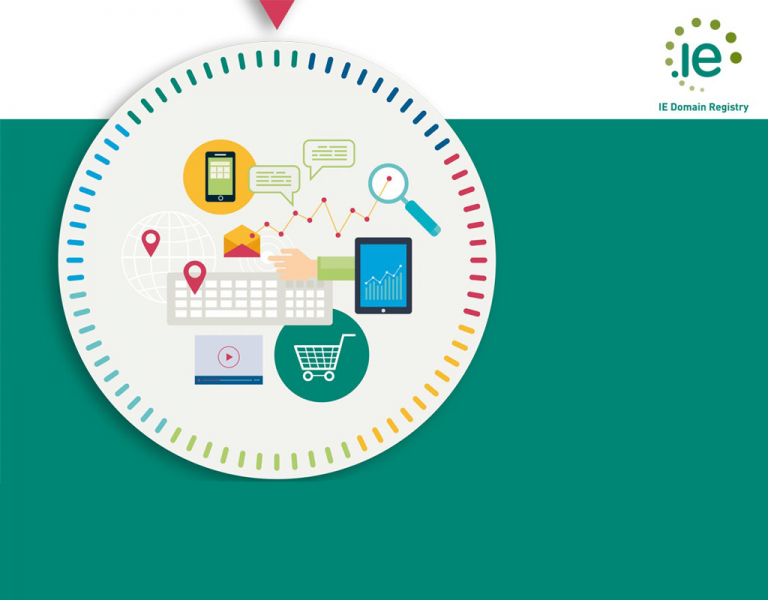
Here’s some headlines from the SME Digital Health Index published by the IEDR….
For the full report visit ‘SME Digital Health Index’
The .ie domain name continues to go from strength to strength since the liberalisation in March this year. See this latest infographic from the IEDR….


Need dedicated resources? Want total control? Need high performance hosting?
We have a limited number of high spec servers that are available for immediate deployment. Only €199.00 plus vat.
Specification:- 8 Core Xeon 2.1GHz, 32GB RAM, 2 x 480GB SSD, 2T Monthly Data Transfer, FREE setup on standard configuration.
Normal monthly price €384.00 plus vat, Now Only €199.00 plus vat.
Order your ‘Dedicated Server’ while stocks last!
If you need help or require a custom build contact our sales team: sales@hostingireland.ie
Now you can get the .ie domain you’ve always wanted….
For Individuals you just need proof of ID – such as a Driving Licence, Passport, or Bank Statement.
For a Business – just a VAT Number, Company Number, or Registered Business Name Number.

If you already have a .ie domain name you don’t need to provide further information, your new .ie domain registration will ‘FASTPASS!’ Just select the ‘FastPass’ option when registering.
Now you can get those ‘IE Domain Names’ you’ve always wanted…without the hassle.
The .ie domain name is going from strength to strength and Hosting Ireland is registering more domains than ever! See the latest report from the IEDR, the registry for .ie domains…..
2017 the strongest year on record for new .ie domains with 108 registered every day
– 39,523 .ie domains registered in 2017, a 14 percent increase on 2016, according to new IEDR dot ie Domain Profile Report
– 237,412 .ie domains now in the database, up 7 percent on 2016
– Nearly every county in Ireland posted increases in new .ie registrations, with significant increases in Munster, Connacht and Ulster
– IEDR CEO: “The .ie domain remains the preferred online address and a powerful digital tool for businesses, organisations and individuals…and is recognised as authentic and trustworthy.”
– dot ie Domain Profile Report critical of recent Eurostat report that claims Ireland is number one in EU for business web sales.

See full press release below…
2017 was the strongest year on record for new .ie domain registrations, according to the latest dot ie Domain Profile Report published today by IE Domain Registry (IEDR), the company that manages and maintains Ireland’s official country domain name, .ie.
39,523 new .ie domains were registered in 2017—an average of 108 a day. The figure is a 14 percent increase on 2016 and the best single year for new registrations.
There are now 237,412 .ie domains in the database, a 7 percent increase on the previous year end and an almost 30 percent increase on five years ago.
The increase was driven by nationwide demand, with new registrations up in all but four counties on the island of Ireland. Corporate bodies and sole traders made up the majority of new .ie registrations (67 percent) in 2017.
Leinster accounted for two-thirds of new registrations in 2017 (24,776), followed by Munster (20 percent, 7,347), Connacht (9 percent, 3,318) and Ulster (5 percent, 1,920).
In Ulster, new registrations increased by 23 percent on the previous year; in Connacht by 21 percent; in Munster by 19 percent; and in Leinster by 14 percent.
On a county level, Dublin registered the most new .ie domains with 43 percent of the total (16,065 domains), a 13 percent increase on 2016. The capital was followed by Cork (9 percent, 3,280 domains) and Galway (5 percent, 1,807 domains), recording 16 percent and 19.5 percent year-on-year increases respectively.
Fermanagh registered the smallest number of .ie domains on the island of Ireland (39). Leitrim registered the smallest number in the Republic of Ireland (171), although both were increases on the previous year.
Despite the national increase in registrations, Ireland still lags behind its European neighbours for the number of country domains per 1,000 people. With 50 .ie domains, Ireland is 18th out of 22, ahead of France and Spain, but behind countries with smaller or similar populations like
Lithuania (64 .lt domains per 1,000 people), Norway (141 .no domains) and Denmark (234 .dk domains).
Commenting on the 2017 report, David Curtin, Chief Executive of IEDR, said: “The .ie domain remains the preferred online address and a powerful digital tool for businesses, organisations and individuals in Ireland. A .ie domain is immediately identifiably Irish, and is recognised as authentic and trustworthy.
“More than two-thirds of new .ie domains in 2017 were registered by businesses, a 6 percent increase on the previous year. This signals a strong, growing economy with enterprises that have the confidence and willingness to invest in their online presence and digital processes. Online address registrations are often recognised as a forward indicator of economic growth and entrepreneurship.
“Encouragingly, .ie domain registrations are spread out across the country. While urban centres dominate the database, we have seen significant year-on-year increases in registrations in Munster, Connacht and Ulster.”
In the new dot ie Domain Profile Report, IEDR says that new Eurostat figures claiming Ireland ranks number one in the EU for web sales are potentially “highly misleading”. *
Mr Curtin said: “Eurostat’s recent survey into EU businesses’ web sales ability puts Ireland in the top spot. While this seems like a very positive result, the reality is that the survey excludes the micro-businesses with fewer than ten employees that make up 92 percent of the Irish economy. The survey is therefore not an accurate reflection of Ireland’s e-commerce capability.
“According to IEDR’s most recent dot ie Digital Health Index, a survey of predominantly Irish micro-businesses’ use of digital assets, two-thirds of Irish SMEs with websites cannot process online payments, while 1 in 5 have no online presence whatsoever. We have a lot of work to do at home before we can truly proclaim ourselves European leaders.
“To improve Ireland’s digital capabilities, we are calling on the Government to collaborate with industry and roll out a national campaign focused on teaching micro-businesses essential digital skills. Robust broadband for rural communities must also be prioritised. In Connacht and Ulster, a quarter of SMEs report a ‘poor’ or ‘very poor’ internet connection.”
IEDR anticipates continued growth nationwide in 2018 as registration of .ie online addresses becomes easier and faster. After March 2018, any individual or business with a provable connection to Ireland will be able to register any available .ie online address on a first-come, first-served basis. Businesses, townlands, parishes and clubs are expected to be interested in the changes. Citizens will be able to register nicknames and short names for the first time.
Changes to .IE Domain Name Registration Policies Effective 21st March 2018…
The rules for registering .ie domain names are changing, following an extensive consultation process over many months. From 21st March 2018, the need to explain why you want a particular domain name (also called ‘claim to the name’) when registering a .ie domain name will be removed.
In the past, along with identification or proof of business, you would have to provide a ‘Claim Letter’ explaining what you planned to use the domain for and why to chose that particular name. The removal of this requirement for .ie registrations is a big change with many benefits…

The removal of the ‘claim to the name’ will make it simpler, easier and faster for businesses to get a .ie registered. It means that anybody with a connection to Ireland will be able to register any available .ie domain name they want. In addition, if you already have a .ie domain name you won’t have to provide paperwork all over again to complete the registration as was previously the case.
However, this could mean that individuals or businesses could register a .ie domain similar to your own brand name. Some customers when registering a domain will register similar versions such as hyphenated for example, in order to provide a level of brand protection and stop other parties ‘passing off’ as their business. So Hosting Ireland for example has registered the following:-
hostingireland.ie
hosting-ireland.ie
Registering variants like this ensures that no one can use your brand name.

Now is an ideal time to secure additional ‘IE Domain Names’ before anyone else can!
What’s not changing…

The IE Domain Registry conduct research based upon the Irish online market, aptly called the Digital Health Index. This research is one view of how the market is developing. See below key findings along with infograph…..
Key Findings
Nearly 20 percent of Ireland’s non-digital SMEs kept offline by poor broadband,
but appetite for digital skills is strong: almost a third of all Irish SMEs want digital and e-commerce training; IE Domain Registry recommends rollout of national digital skills programme.
IEDR’s biannual dot ie Digital Health Index records highest ever score, but e-commerce problems persist;
– Only 40 percent of Irish SMEs with a website can process sales orders through it;
– Lack of online presence and e-commerce capability is frustrating consumers and impacting business trustworthiness;
– Two-thirds of Irish SMEs have a website, while more are using social media and data analytics;
– IEDR CEO: “We live in an age of convenience. Consumers expect to be able to research and buy from businesses, online 24/7.”

Full Published Report
Nearly 20 percent of Ireland’s offline SMEs are stopped from building a website or engaging in e-commerce because of a poor internet connection, according to the latest edition of the dot ie Digital Health Index published today by the IE Domain Registry (IEDR), the company that manages and maintains Ireland’s country domain, .ie.
14 percent of Irish SMEs rate their internet connection as ‘poor’ or ‘very poor’, a figure that rises to 25 percent in Connacht and Ulster.
Despite these issues, almost a third (32 percent) of Irish SMEs want more digital skills and e-commerce training.
To remedy this, IEDR is recommending the rollout of a cross-industry digital skills programme for micro-businesses that have begun their digital journey, but need help to access Ireland’s growing e-commerce market; as well as a Local Enterprise Office-run ‘buddy system’ that pairs up businesses with digital experts in their local area.
E-commerce, is becoming an increasingly important part of Ireland’s economy. Ireland’s share of the European e-commerce market is €9 billion and is expected to grow to €14 billion by 2021. However, most of this spend is going abroad to foreign retailers that offer more comprehensive online services.*
While only 40% of Irish SMEs with websites can take sales orders, it is a noteworthy improvement on just 30% in the last wave of research only six months ago, indicating that SMEs are realising the benefits of selling online.
Consumer sentiment and e-commerce ability
While many offline SMEs struggle with the technical aspects of setting up and maintaining a website or social media page, or are kept offline by a poor internet connection, the majority (53 percent) of ‘offliners’ say there is simply ‘no need’ to have an online presence in their industry. However, the dot ie Digital Health Index reveals that SMEs with a website earn, on average, an additional €26,825 per annum.
Consumers expect businesses to be online: almost 70 percent said it is ‘frustrating’ if a business does not have a website, two-thirds say a business looks ‘outdated’ if it does not have one, and nearly 30 percent do not even trust a business that does not have a website. Furthermore, 59 percent of consumers said that if a business has no online presence, they would be less likely to use their services or do business with them offline.
Clearly, there is a gulf between consumer sentiment and SME action. Micro-businesses make up more than 92 percent of all businesses in the Irish economy, but only 14 percent of SMEs have any web sales ability at all.
Brexit has done little to persuade offline SMEs to go digital. Only 8 percent said the UK’s vote to leave the EU had encouraged them to reassess their plans to develop an e-commerce-enabled website.
The .ie Digital Health Index improves
IEDR’s dot ie Digital Health Index is a biannual report that assesses the number and quality of digital assets owned by Irish SMEs, such as websites, social media pages and e-commerce tools.
Despite ongoing issues with internet infrastructure and a persistent low uptake of e-commerce, this edition of the dot ie Digital Health Index recorded the best score for Ireland’s overall digital health since research began in 2014.
Exactly two-thirds of Irish SMEs have websites. An increasing number are using social media, particularly Facebook (62 percent, up from 50 percent), while more businesses are using data analytics to interact with and learn about their customers (17 percent, up from 7 percent). SMEs are also more confident in the quality of their digital assets and their contribution to business.
Other key findings:
– 78% of SMEs said their website was important in generating new business and sales;
– 41 percent of SMEs say that social media is less important than their website;
– Nearly two-thirds (63 percent) of Irish SMEs do not promote their services online. Among those that do, the average monthly spend is €144;
– Paradoxically, almost half of SMEs (47 percent) without a website acknowledge the importance of a website in generating increased business awareness.
Comment
David Curtin, Chief Executive of IEDR, said the increase in the overall score of the dot ie Digital Health Index is good news, but big changes are needed before Ireland can become a major e-commerce player.
“It is encouraging to see the dot ie Digital Health Index hit its highest ever score. Generally speaking, SMEs are actively embracing the benefits of an online presence and its power to grow revenues, improve customer relations, and analyse market behaviour.
“However, nearly 1 in 5 SMEs remain completely offline despite almost half of them acknowledging the importance of a website in some way. Our research has shown time and time again that while many businesses do not see a need to have a website of their own, the majority of consumers strongly disagree. In fact, a business with no online presence, or even a poorly designed one, is likely to be damaging its offline reputation.
“We live in an age of convenience. Consumers are tech-savvy but can be time-poor. They expect to be able to research and buy from businesses online 24/7. Offline SMEs will lose out to their competitors.
“Going online, building a website and engaging in e-commerce, even using third-party platforms or products, is not as complicated as it was ten years ago. There are many inexpensive, often free, easy-to-use tools that can have you marketing and selling your product to customers online in as little as a few hours.
“Beyond educating SMEs in the benefits of e-commerce and digital business, there are ongoing infrastructural issues that must be addressed as a matter of urgency. Access to Ireland’s broadband network, while vastly improved on a decade ago, is still limited in many rural parts of the country. For a quarter of all SMEs in Ulster and Connacht in 2017 to describe their connection as ‘poor’ illustrates the extent of the digital divide.
“Ireland will not become a major e-commerce player overnight. Industry and Government must continue to work shoulder-to-shoulder to ensure that SMEs in all regions of the country have access to a modern, high-speed internet connection that allows reliable access to the global digital marketplace. The research indicates that e-commerce awareness is no longer a major issue. Going forward, resources must be targeted at improving the digital sales skills of online businesses, who already understand the benefits of an online presence, through digital skills and mentorship programmes.”
ENDS
Hosting Ireland
Hosting Ireland is committed to helping businesses get online and this often starts with a domain name. As an Accredited Registrar we can help you search and find your perfect domain name, plus you’ll have peace of mind that your domain is managed securely, not just when you register your domain, but also ongoing annual renews too. So if you’re not online Now is an ideal time to secure your prefect ‘IE Domain Name’ why wait?
Still getting unwanted emails? Keep your inbox clear of junk email for a year with our Advanced Email Filtering for only €4.98 plus vat and save 50%.
Simply use the promo code BLACKFRIDAY at the checkout, offer applies to our annual Advanced Email Filtering, normal price €9.95 plus vat with Hosting. Normal price without hosting €19.95 plus vat and 50% promo discount will apply. (note:- If you already have a shared hosting account with Hosting Ireland the €4.95 plus vat promo price still applies).
So you don’t miss out our Black Friday offer runs from 09:00am Thursday 23rd November until Tuesday 9:00am 28th November’17
Get ultimate website security for your website visitors with our SSL Cert offer. Now you can get a SSL Cert with your hosting package for just €4.98 plus vat and save 50%
When you buy your hosting and SSL Cert simply use the promo code CYBERMONDAY at the checkout, offer applies to one annual SSL Certificate for Shared Hosting, Linux only, normal price €9.95 plus vat (note:- If you already have a shared hosting account with Hosting Ireland the promo price still applies, just use the promo code).
So you don’t miss out our Cyber Monday offer runs from 09:00am Thursday 23rd November until Tuesday 9:00am 28th November’17
© 2023 Hosting Ireland | Registered Company Number : 472520